
Queen bees for sale
Queen bees for sale means a queen that is young, mated and laying — not a spare part you drop into a box and forget. She needs to be mated, laying and accepted by the colony. This guide explains how to judge a queen and how Melbourne Beehives supplies queens.
Short answer: a queen bee for sale should be young, mated, laying and from a colony that is monitored for disease and Varroa. A mated queen is not the same as a virgin queen, and a queen alone is not a colony. Melbourne Beehives normally supplies a young mated queen already laying in an 8-frame nucleus colony. If you need a standalone mated queen, call to confirm current availability, timing and whether it is the right fix for your hive.
Start here
Queen bees for sale — what to check before you buy
Most “queen bees for sale” listings are selling one of two things: a mated queen to requeen an existing colony, or a nucleus colony that already contains a queen. They solve different problems.
A mated queen has flown, mated and should be laying. She can be introduced to a queenless colony with a proper introduction cage. If the colony is strong, has brood and is otherwise healthy, a new queen can turn it around.
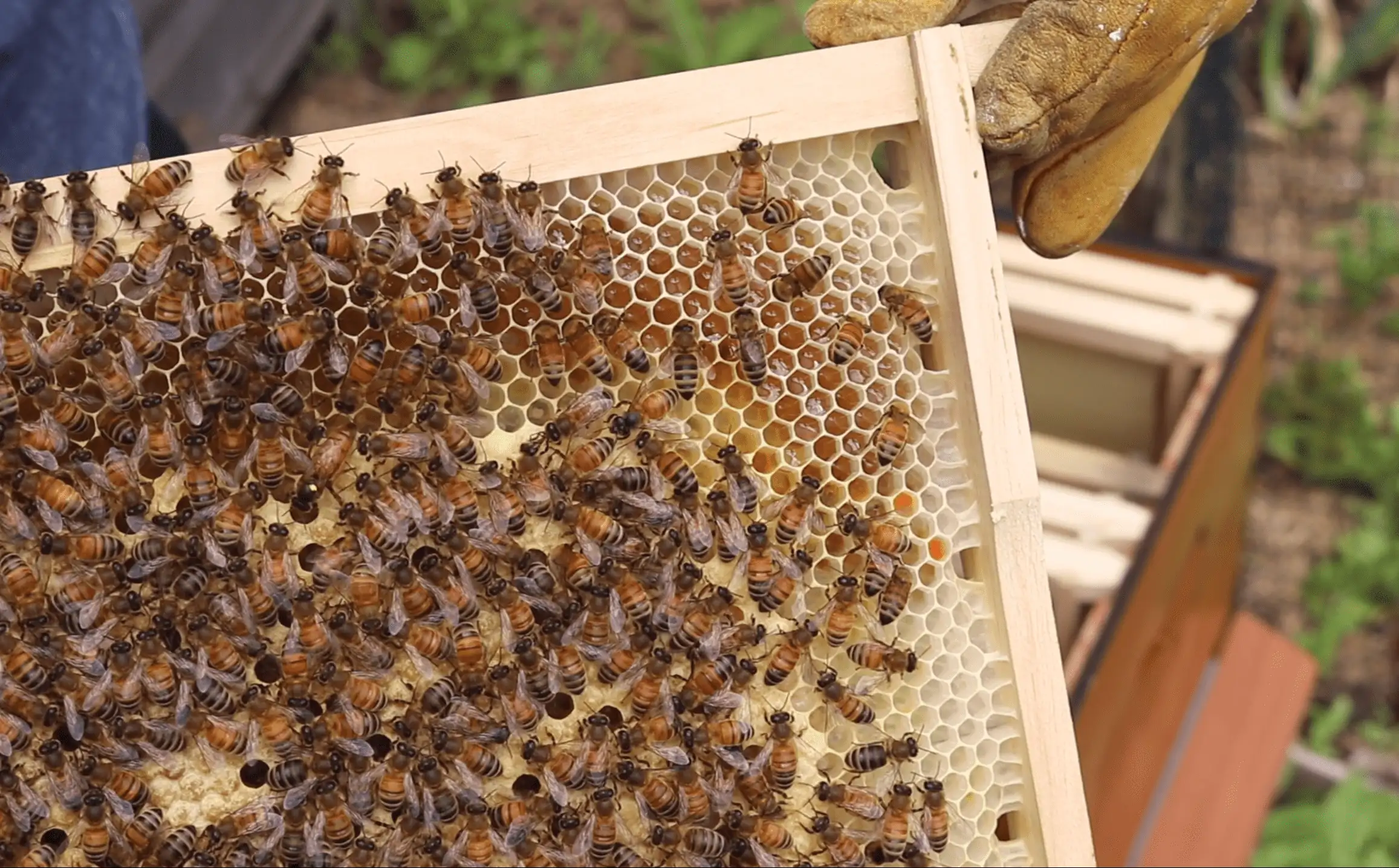
A nucleus colony is a small working colony with a queen, brood, workers, drawn comb and stores. For a new beekeeper, this is usually the safer purchase. You are not just buying a queen; you are buying a colony that already accepts her.
Some listings use “queens bees for sale”; the checks below are the same.
A virgin queen has not mated yet. She is cheaper and harder to use. She needs drones, good weather and time before she can lay. A beginner should not buy an unmated queen to fix a failing hive.
Compare
Mated queen vs nucleus colony vs virgin queen
The cheapest queen is not always the cheapest solution once you count failed introductions, lost brood and a delayed season.
| What you get | Mated queen | Nucleus colony | Virgin queen |
|---|---|---|---|
| Mated | Yes — confirm before buying. | Yes, normally already laying. | No. |
| Laying | Usually yes, but ask. | Yes — check the brood. | Not yet. |
| Workers and brood | No — queen only. | Yes — a working colony. | No — queen only. |
| Introduction needed | Yes, with a cage. | The colony is already established. | Yes, plus mating time. |
| Best for | Requeening a strong, queenless colony. | Starting a hive or replacing a failed colony. | Experienced breeders with drones and time. |
| Main risk | Rejection, damage, or a queen that is not laying. | Frame compatibility and site readiness. | Poor mating weather, drone shortage, delay. |
Our recommendation: if you are starting from scratch, buy a nucleus colony rather than a queen alone. If you already have a queenless colony with brood and workers, a mated queen is the targeted fix. If you are unsure which situation you have, inspect the brood first — a new queen will not fix a drone-laying worker or a colony with no workers.
The listing
What a queen bee listing should tell you
A serious queen seller can answer basic questions without guesswork. If the listing is only a photo and a price, ask for the rest before you pay.
Age and mating status
Ask when the queen emerged, when she mated and whether she has been seen laying. “Young queen” is not a date. “Mated and laying” is a claim you can verify by inspecting brood.
Marking and year colour
A marked queen is easier to find. The colour usually follows the international year code. A mark is a management aid, not proof of quality. Ask whether the mark is still visible and whether the queen has been clipped; clipped queens need different handling.
Origin and strain
Ask where the queen was raised and what strain she is. Italian and Carniolan queens are common in Australia, but temperament and performance depend on the colony and the cross. Do not choose a queen on a breed name alone.
Health and Varroa history
Ask how the breeder monitors Varroa and AFB. No one can honestly promise a “Varroa-free” queen forever. What matters is a monitored colony, clean records and disclosure of any treatment or disease history.
Replacement and guarantees
Ask what happens if the queen arrives dead, damaged or is rejected. A short guarantee is normal; an unlimited “guaranteed to lay” promise is not. Understand whether replacement covers the queen only or the colony.
Delivery method
Queens are live animals. Ask how they are transported, how long they will be in transit and what you should do on arrival. Do not accept a queen that has been left in a hot mailbox or a courier depot for hours.
Requeening
When buying a queen alone makes sense
A standalone mated queen is a tool for a specific job: replacing a failing queen in an established colony. It is not the usual way to start a new hive.
Good reasons to requeen
- The colony is queenless and has no queen cells.
- The queen is old, injured or has a poor laying pattern.
- The colony is drone-laying and needs a new queen after the workers are addressed.
- You want a different strain for temperament or management reasons.
- You are rebuilding a colony after a failed introduction.
Bad reasons to buy a queen
- The colony has a queen but you have not looked for her.
- The hive has no workers or brood to support a new queen.
- You are trying to fix AFB or a heavy Varroa infestation with a queen alone.
- You want a “better” queen without a plan for the old one.
- You are buying an unmated queen for a first hive.
If you already have a colony, inspect it before you order. A queen is only one part of the colony; the workers, brood, stores and comb have to be healthy enough to support her.
Introduction
Introducing a mated queen safely
Do not release a new queen directly into the hive. The colony may kill her. Use a proper introduction cage and give the colony time to accept her.
- Confirm the colony is queenless. Look for eggs, larvae and queen cells. If a queen is present, find her before you add another.
- Remove the old queen or queen cells. A new queen will not be accepted while the colony has a queen or is raising one.
- Place the queen cage. Put the cage between frames near the brood, with the candy plug accessible to the workers.
- Leave it for 3–5 days. Check whether the workers are clustered calmly around the cage. Aggressive biting at the cage is a warning.
- Open the candy plug. Let the workers release her; do not reach in and let her out yourself.
- Check for eggs later. Do not expect a new queen to lay the same day. Give her time, then inspect for eggs and young larvae.
If the colony is small, queenless and has no brood, a mated queen may still fail. A nucleus colony is usually the better route.

Queen health
Signs of a failing queen
A queen can be present and still be a problem. The brood pattern tells you more than a quick look at the queen herself.
- Spotty brood: gaps in the brood pattern can mean a failing queen, disease or poor comb.
- Drone layer: a queen that has run out of stored sperm lays mostly drones. This is not fixed by feeding.
- No eggs or young larvae: the queen may be dead, injured or not laying.
- Queen cells: the colony may be trying to replace her or swarm.
- Small colony: a queen cannot build a colony without enough workers and stores.
Check the brood before you order a queen. A spotty pattern can also come from chilled brood, AFB or a queen that is just starting to lay. If you see signs of AFB, do not move frames between hives; report it and follow Agriculture Victoria advice.
If the queen is old but still laying well, you may not need to replace her yet. Requeening has a cost and a risk. Do it for a reason, not because a listing says “new season queen”.
Melbourne
When to buy queen bees in Melbourne
Spring and early summer are the practical window for mated queens. Drones need to be flying, the weather needs to be warm enough for mating flights, and the colony needs time to build before winter.
Extreme heat is a real risk. A queen in a cage or a new nucleus colony can overheat in a car, a mailbox or a full-sun site. Plan pickup and installation for a cooler part of the day and keep the colony shaded and ventilated.
Autumn queens can work in a strong colony, but a new colony started late in the season has less time to draw comb and store food. If you are buying in autumn, ask whether the colony is strong enough to winter and whether the queen is already laying.
Biosecurity
Queen bees, Varroa and Australian rules
Queens are live animals and a disease risk if they are moved without checks. Australia has strict import and interstate movement rules. Do not buy a queen from an overseas seller or an unverified source and assume it can be sent to Victoria.
Varroa
Ask how the queen’s colony is monitored. Varroa is established in Victoria and must be managed, not ignored. A queen from a monitored colony is not a guarantee that your hive is Varroa-free; you still need to monitor your own apiary.
Notifiable disease
AFB and other notifiable pests must be reported. If you suspect disease in a colony you are buying or introducing a queen to, stop and get advice before moving anything.
Records
Keep a record of where the queen came from, when she was introduced and what happened. If there is a disease or treatment issue later, the history matters.
Registration
If you keep bees in Victoria, register the apiary with Agriculture Victoria. Registration is required for one or more hives and is renewed every two years. The hive must have individually removable frames.
For suspected Varroa, record a Varroa inspection event in BeeMAX and call the Emergency Plant Pest Hotline on 1800 084 881. For general bee biosecurity advice, contact Agriculture Victoria on 136 186.
Value
What affects the price of queen bees
Queen prices vary with strain, marking, mating status, season, availability and delivery. A queen alone is usually cheaper than a nucleus colony, but the comparison is not like for like.
- Mated vs virgin: a mated, laying queen costs more than an unmated queen.
- Marked and clipped: extra handling adds cost; clipping is a management choice, not a quality upgrade.
- Strain and breeder: specialist breeding costs more than a queen raised from a local colony.
- Season: queens are harder to produce in cool weather and around peak demand.
- Delivery: live transport and timing add cost.
Do not choose a queen on price alone. A cheap queen that is not laying, arrives stressed or is rejected costs more than the difference in the purchase price. Ask what is included and what happens if she fails.
For a new hive, compare the total cost of a queen plus a package or a split against a nucleus colony. The nucleus colony usually includes brood, workers and drawn comb, which is why it costs more.
Buying help
Queen bees for sale — questions to ask
Where can I buy queen bees in Melbourne?
You can buy a mated queen from a specialist breeder or a nucleus colony from a local supplier. Melbourne Beehives normally supplies a young mated queen already laying in an 8-frame nucleus colony. Call to confirm current queen and colony availability.
What is the difference between a queen bee and a nucleus colony?
A queen is one bee. A nucleus colony is a small working colony with a queen, brood, workers, drawn comb and stored food. A queen alone needs an existing colony to support her; a nucleus colony is a starting colony.
Is a mated queen the same as a laying queen?
Not always. A mated queen has flown and mated, but she may not have started laying yet. Ask whether she has been seen laying and check for eggs and young larvae before you accept her.
Can I buy an unmated queen?
Yes, but it is not a beginner purchase. A virgin queen still needs to mate, and mating depends on drones, weather and time. For a first hive or a failing colony, a mated queen or a nucleus colony is usually safer.
How much do queen bees cost in Australia?
Prices vary with mating status, strain, marking, season and delivery. A mated laying queen usually costs more than a virgin queen, and a nucleus colony costs more than a queen alone because it includes brood, workers and comb. Call for current pricing.
How do I introduce a new queen?
Confirm the colony is queenless, remove the old queen or queen cells, place the new queen in an introduction cage between frames, leave it for 3–5 days, then open the candy plug. Check for eggs and young larvae later. Do not release her directly.
Why has my new queen not started laying?
She may still be mating, may have been rejected, may be injured, or the colony may not be strong enough. Check the cage, the brood and the colony temper. Do not open the hive repeatedly in the first few days.
Can I buy queen bees online and have them posted?
Live queen transport is possible in Australia, but it depends on the seller, the season and the route. Ask how the queen is packed, how long she will be in transit and what to do on arrival. Overseas imports are restricted.
Do queen bees carry Varroa?
Varroa can travel with adult bees and brood, so source matters. Ask how the breeder monitors and manages Varroa. No seller should promise a permanently Varroa-free queen; you still need to monitor your own apiary.
Should I buy a queen or a nucleus colony for a new hive?
For a new hive, a nucleus colony is usually the better choice. It already has a laying queen, brood, workers and drawn comb. A queen alone is better for requeening an existing colony that has workers and brood but no queen.
Need a mated queen or a colony that already has one?
Tell us what your hive is doing: queenless, failing queen, new setup or a split. We will tell you whether a queen or an 8-frame nucleus colony is the better fit.