
Melbourne Beehives
Nucleus colonies & backyard bees
Melbourne Beehives supplies 8-frame Langstroth nucleus colonies in Melbourne, not loose package bees. Each colony arrives with a young mated queen already laying, brood, drawn comb, stored honey and pollen, and worker bees. We can transfer the frames into your Flow or Auto Hive brood box on delivery.
Short answer: If you are searching for bee packages in Melbourne, the better option is a nucleus colony. Melbourne Beehives supplies 8-frame nucleus colonies with organic wax foundation, drawn comb, brood, honey, worker bees and a young mated queen that is already laying. Everything is integrated, healthy and working together before you install it.
In this guide: What arrives · Delivery day · Flow or Auto Hive transfer · Seasonal care · Best practices · Examples
What we supply
A complete, working colony from Melbourne Beehives — not a box of loose bees
A bee package is loose bees with a caged queen. A nucleus colony is a small, established colony: frames of comb, brood in all stages, stored honey and pollen, worker bees and a queen that is already laying.
That difference matters for a new beekeeper. The colony is already doing what a colony is supposed to do. You are not asking the bees to start from nothing, draw every frame of foundation and accept a new queen at the same time.
- Eight Langstroth frames, ready to transfer
- Organic wax foundation and drawn comb
- Brood, honey, pollen and worker bees
- Young mated queen, already laying
Looking for bees for sale in Melbourne? Read the buying guide. Add an 8-frame Langstroth hive box for $300 when you buy a nucleus colony — see the hive box add-on.

Inside the box
What is a nucleus colony? What arrives in your 8-frame box
Every component of the colony is already present and functioning. That is the difference between a nucleus colony and a package.
Young mated queen
Already laying eggs, so the colony has a working queen from day one.
Brood in all stages
Eggs, larvae and capped brood show the colony is actively raising new bees.
Worker bees
Scouts, foragers, nurses and house bees at different stages of life.
Drawn comb
Comb that is already built and ready for the queen to use.
Organic wax foundation
Frames prepared with organic beeswax foundation, not a bare starter strip.
Honey & pollen stores
Stored food that helps the colony settle in and feed young bees.
Why nucleus colonies win
Why new beekeepers do better with a nucleus colony
Already integrated
The queen, brood, workers, comb and food are one functioning colony. You are moving a working system, not assembling one from scratch.
Less disruption
No package installation, no caged queen introduction and no waiting for the colony to accept a new queen.
Faster start
Frames of brood and stored food give the colony a head start. It can build up and get to work sooner.
| What you are comparing | Package bees | Nucleus colony from Melbourne Beehives |
|---|---|---|
| What arrives | Loose bees and a caged queen | An 8-frame Langstroth nucleus colony |
| Comb | No comb; bees must draw foundation | Drawn comb and organic wax foundation |
| Queen | Caged queen, accepted after installation | Young mated queen, already laying |
| Brood | None | Eggs, larvae and capped brood |
| Food | No stored honey or pollen | Honey and pollen stores |
| Start | Slower, with more risk in the first weeks | Faster and more stable for a new beekeeper |
| Best for | Experienced beekeepers with a plan | New beekeepers who want a strong, integrated start |
We do not sell package bees. If you searched for bee packages, a nucleus colony is the stronger option — and it is what we supply.
First week
How to install a nucleus colony
The process is simple, but it helps to have a clear sequence. We talk you through it before pickup or delivery.
Prepare the hive
Set up an 8-frame Langstroth brood box in the final position. Keep the hive level and the entrance open.
Place the nucleus nearby
Put the nucleus box beside the hive and keep it closed until you are ready to transfer the frames.
Check the frames
Open the box, confirm the queen is present and note the order of the frames.
Transfer the frames
Move the frames into the brood box in the same order, keeping the brood nest together.
Close and settle
Replace the lid, reduce the entrance if needed and leave the colony to settle.
Check in 5–7 days
Look for the queen, fresh eggs and normal brood patterns. Call us if something looks wrong.
What happens on the day
What a typical Melbourne Beehives job looks like
Every site is different, but most new-colony jobs follow the same practical sequence: deliver the colony in its 8-frame box, transfer the frames into the hive, then show you how to handle the bees and manage the colony through the first season.
1. The colony arrives in its 8-frame box
We bring the nucleus colony in the same 8-frame Langstroth box it was raised in. The frames stay upright and the colony stays together. Before we open anything, we check the hive position, the stand, the entrance and where you will keep your tools.
2. The frames go into your brood box
We open the box, find the queen, check the brood pattern and move the eight frames into your brood box in the same order. Keeping the brood nest together matters more than making the hive look tidy. If you use a Flow or Auto Hive, the frames go into the brood box; the flow-style honey frames stay in the super.
3. We record the interactive walk-through
During the visit we record an HD video session. You can ask questions while we handle the frames, check for the queen, look at brood, close the hive and talk through feeding. The recording is about your colony and your equipment, not a generic course.
4. You keep the recording and a clear next step
The video covers handling, reading frames, feeding and seasonal management, and it answers the questions that come up on the day. We send it as a private link so you can rewatch the parts you need. Before we leave, we agree on the first check and what to do if the colony looks light, crowded or unsettled.
Not sure what your hive needs? Read the full nucleus colony guide or send an enquiry with your hive type and suburb.
Flow and Auto Hive
How to transfer a nucleus colony into a Flow or Auto Hive
Flow and Auto Hive brood boxes normally take standard Langstroth frames, so the eight frames can go straight in. Check your model and box size before delivery. If your hive uses a different frame size, tell us before the day.
Before the transfer
- Set the hive level on a stable stand, with the entrance clear and the lid off.
- Have the brood box ready and the frames you are removing set aside safely.
- Keep the flow-style honey frames in the super. They are not brood frames.
- Have a water source nearby and keep pets and children back from the working area.
During the transfer
- Open the nucleus box gently and find the queen before moving frames.
- Lift each frame by the ends, keep it upright and move it in the same order.
- Keep the brood nest together; do not shake bees off the frames.
- Close the hive, reduce the entrance and check again in five to seven days.
If the brood box holds more than eight frames, fill the remaining space with frames and foundation rather than leaving a gap. See the 8-frame hive box add-on or compare hive, colony and hive-with-bees options.
The Melbourne year
How to manage and feed bees in every season
Melbourne can give you a cold snap, a hot northerly and a dry spell in the same month. Manage the colony in front of you, not just the calendar. Feeding is a tool for a specific problem, not a routine.
| Season | What the colony needs | What to check | Feeding |
|---|---|---|---|
| Spring September–November | Space to build up, a laying queen and room for the brood nest. | Queen, brood pattern, stores, swarm cells and space in the brood box. | 1:1 white sugar syrup only if stores are low or cold weather keeps bees in. Add a super when the colony is strong. |
| Summer December–February | Water, shade, ventilation and space during the main flow. | Water source, overcrowding, pests, varroa monitoring and honey stores. | Usually no feeding during a nectar flow. Feed only in a genuine dearth, and never feed honey from an unknown source. |
| Autumn March–May | Strong winter bees and enough stored food to get through the cold. | Stores, queen, brood, varroa and the entrance size. | 2:1 white sugar syrup if the hive is light. Treat varroa only with APVMA-registered products under the label or permit. |
| Winter June–August | A dry, ventilated hive and enough stores to cluster on. | Hive weight, condensation, entrance and signs of robbing. | Fondant or candy if the hive is light. Avoid opening the hive in cold, wet weather unless you have a reason. |
For Victorian requirements, check the biosecurity guide and pest and disease guide. For feeding detail, read feeding honey bees.
Do the basics well
Best practices for a new nucleus colony
Set the hive before the bees arrive
Level stand, stable base, morning sun, afternoon shade where possible, and a clear entrance. A hive that moves or floods in the first week is harder for a new colony to settle into.
Keep the brood nest together
Move the eight frames in the same order. The queen, brood and food are a working system; rearranging them for appearance adds stress.
Inspect on day five to seven
Look for the queen, fresh eggs and a normal brood pattern. Then inspect less often; every opening disturbs the colony and breaks the nest temperature.
Feed only when needed
Use white sugar syrup or fondant. Do not feed honey from an unknown source, and do not keep feeding once the colony has enough stores.
Monitor pests and varroa
Know what is in your hive and follow current Agriculture Victoria guidance. Use only registered treatments under the label or permit.
Write it down
Record the date, queen seen, brood, stores, temperament and any action. A simple notebook makes the next inspection much more useful.
Choosing a colony? Compare nucleus colonies or read the bees for sale guide. Looking for a queen? See the queen bee guide.
What it looks like in practice
Examples: three typical Melbourne jobs
These are illustrative examples based on the kinds of jobs we do. They are not customer testimonials, and every colony and site is different.
Example 1: a first Flow Hive in the suburbs
A new beekeeper had a Flow Hive assembled and level. We delivered an 8-frame nucleus colony, transferred the frames into the brood box, left the flow super off and recorded the first inspection. The first check was set for day seven.
Example 2: an Auto Hive in a windy garden
An exposed site needed the stand checked, the hive tied down and the entrance reduced. We transferred the colony, talked through water and wind protection, and recorded the session so the owner could review the handling.
Example 3: a regional delivery with a hive box
A customer ordered the 8-frame box add-on with a colony. We delivered both, transferred the frames, confirmed the lid and stand, and talked through the first feed and the first inspection before leaving.
Want the full service? Call 0430 370 440 or send an enquiry. You can also compare nucleus colonies and package bees before you book.
Learn more
Practical guides for Melbourne beekeepers
Start with the colony, then use these guides for the first season.
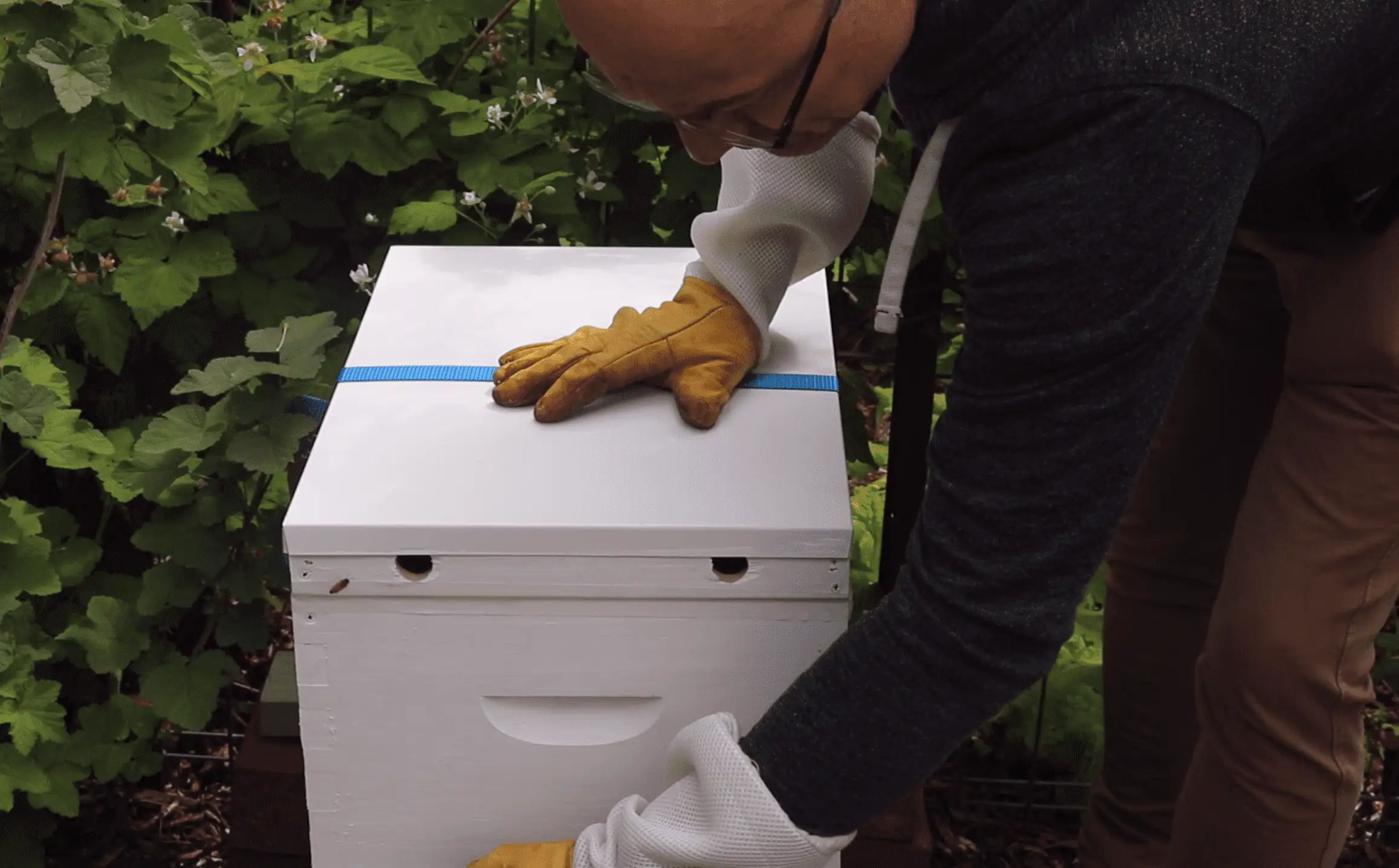
Nucleus colonies
What you get, why it is better than a package, and how to reserve.
View nucleus colonies →
Swarm removal
Bee-friendly swarm rescue and relocation across Melbourne.
Swarm removal →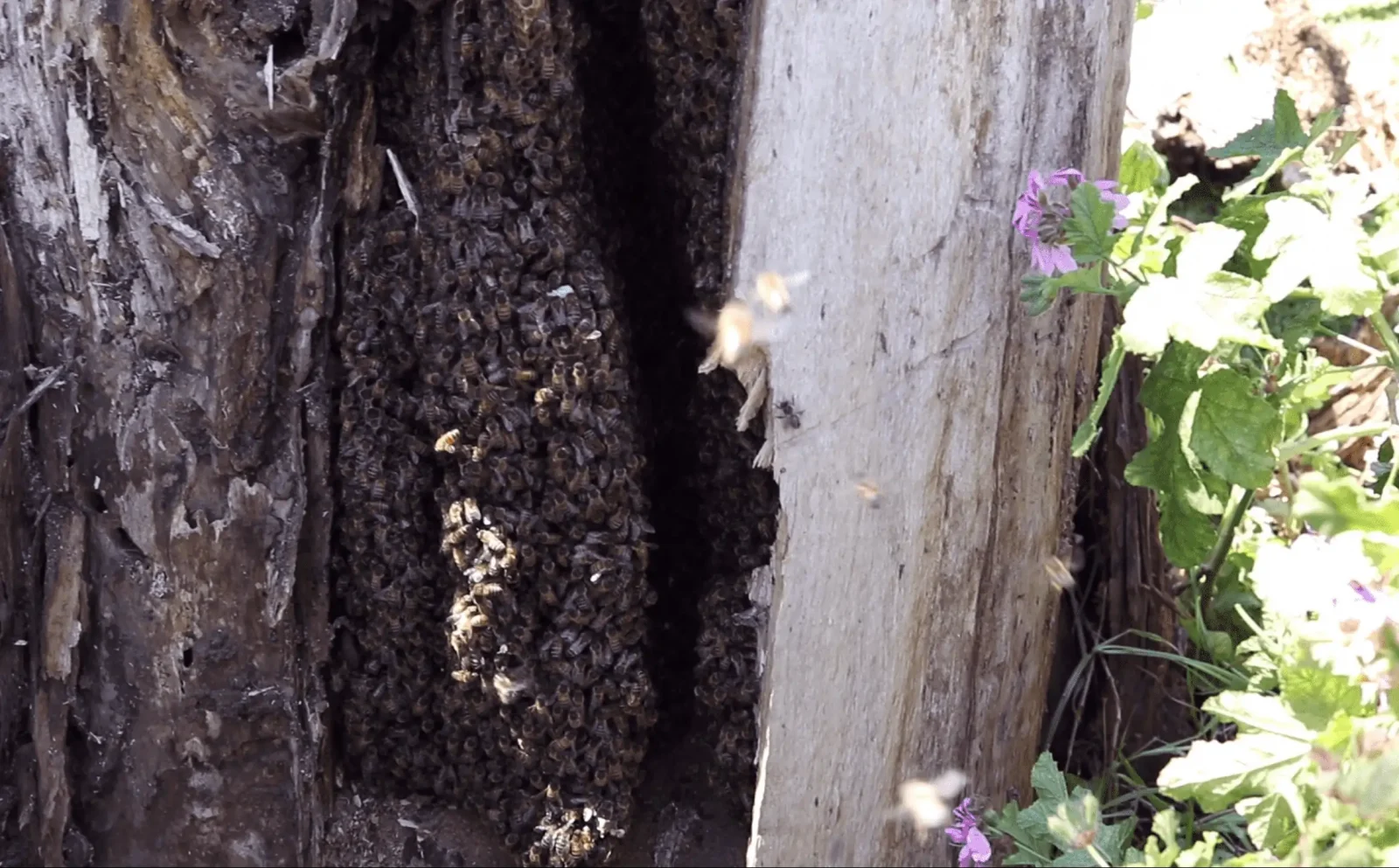
Honey bee health
Brood, queen and colony health basics for new beekeepers.
Bee health →
Biosecurity
Varroa, hygiene and movement rules for Victorian hives.
Biosecurity →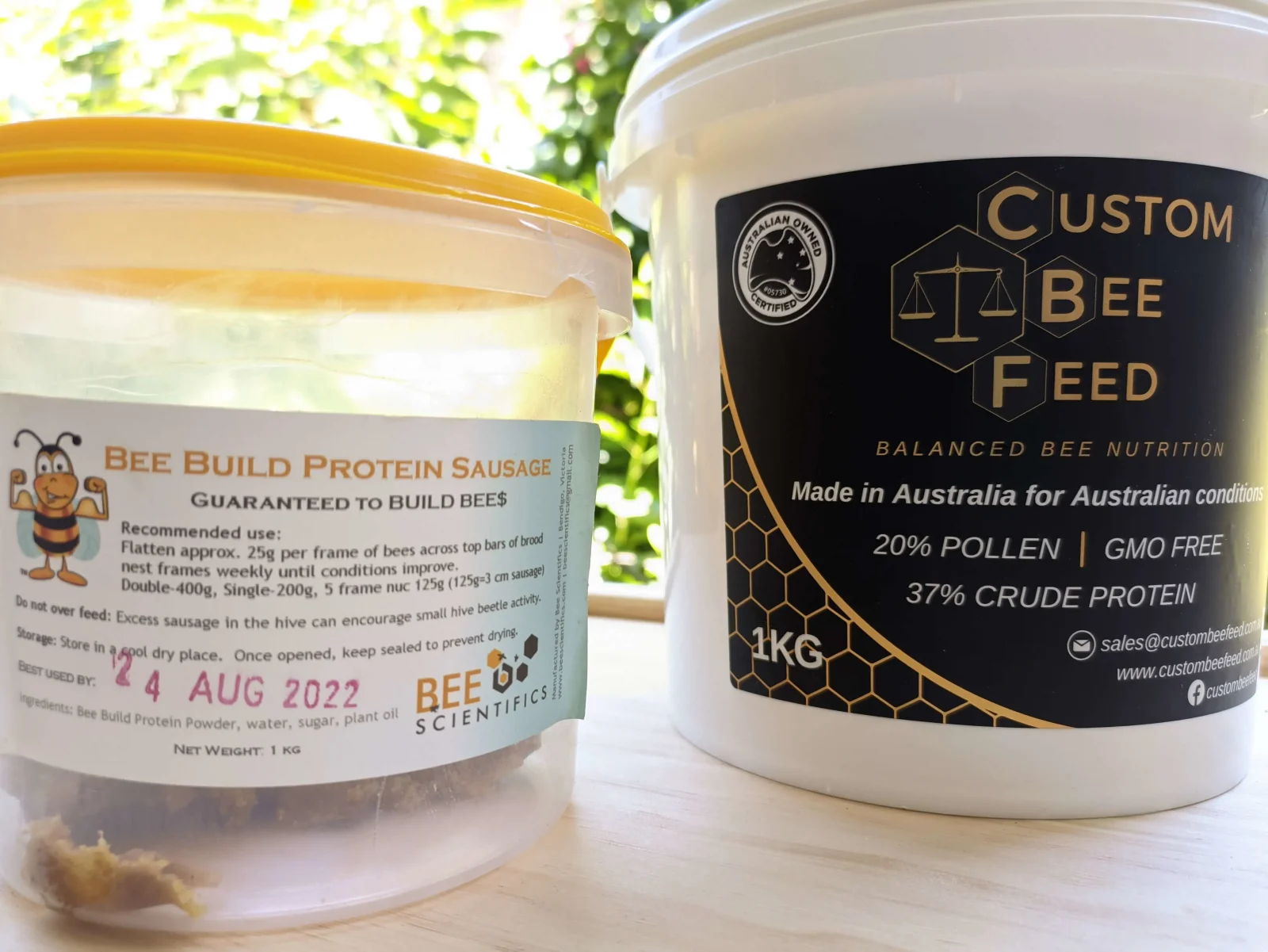
Feeding honey bees
When, what and how to feed a new colony.
Feeding guide →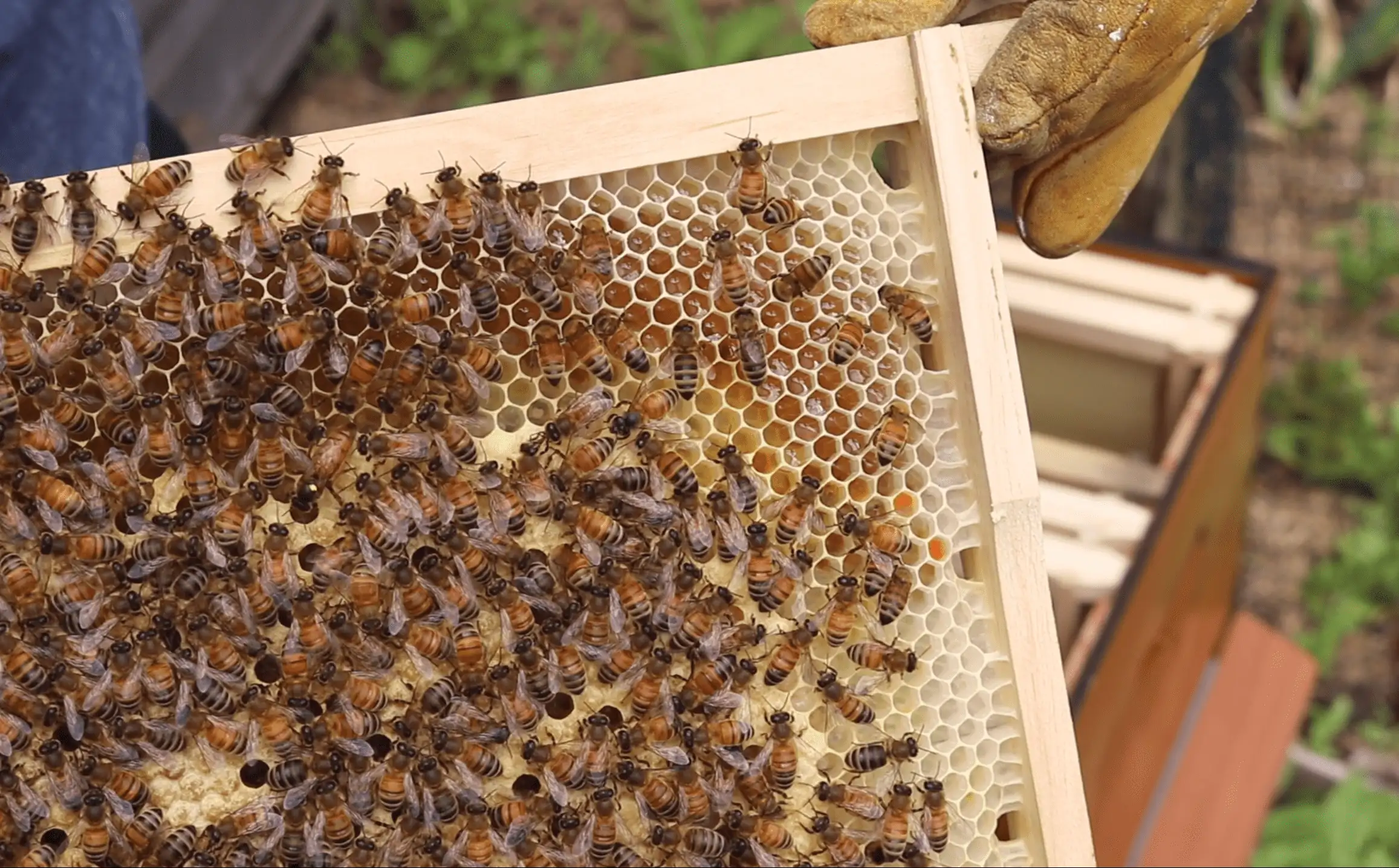
Pests & diseases
Varroa, wax moth, small hive beetle and other common problems.
Pests & diseases →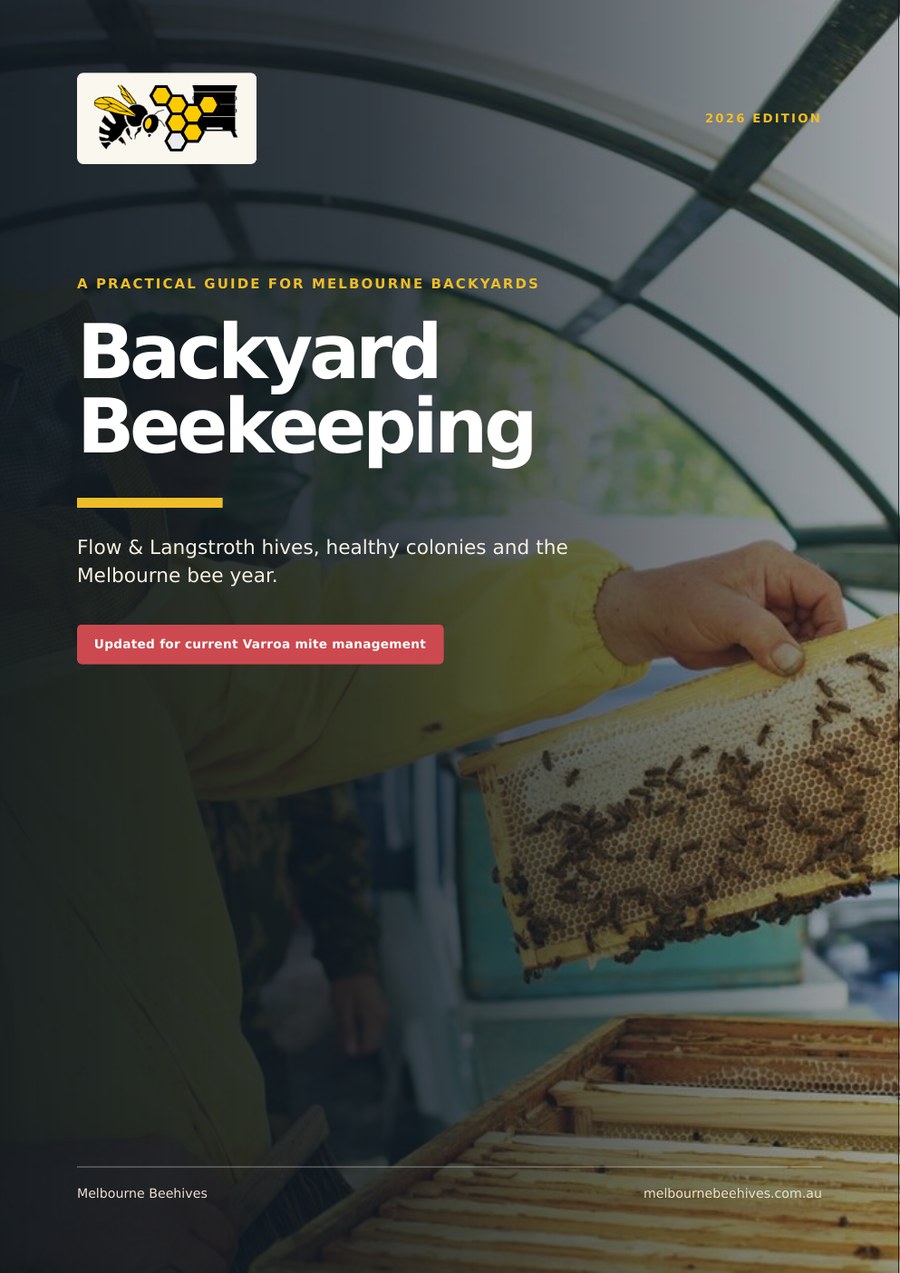
Free 2026 guide
The Melbourne backyard beekeeping guide
46 pages on hive choice, siting, installing a nucleus colony, seasonal care, Varroa monitoring and the first-year checklist. Written for Melbourne conditions.
- Current Varroa and Agriculture Victoria guidance
- Step-by-step 8-frame nucleus colony installation
- Printable first-year checklists and seasonal plan
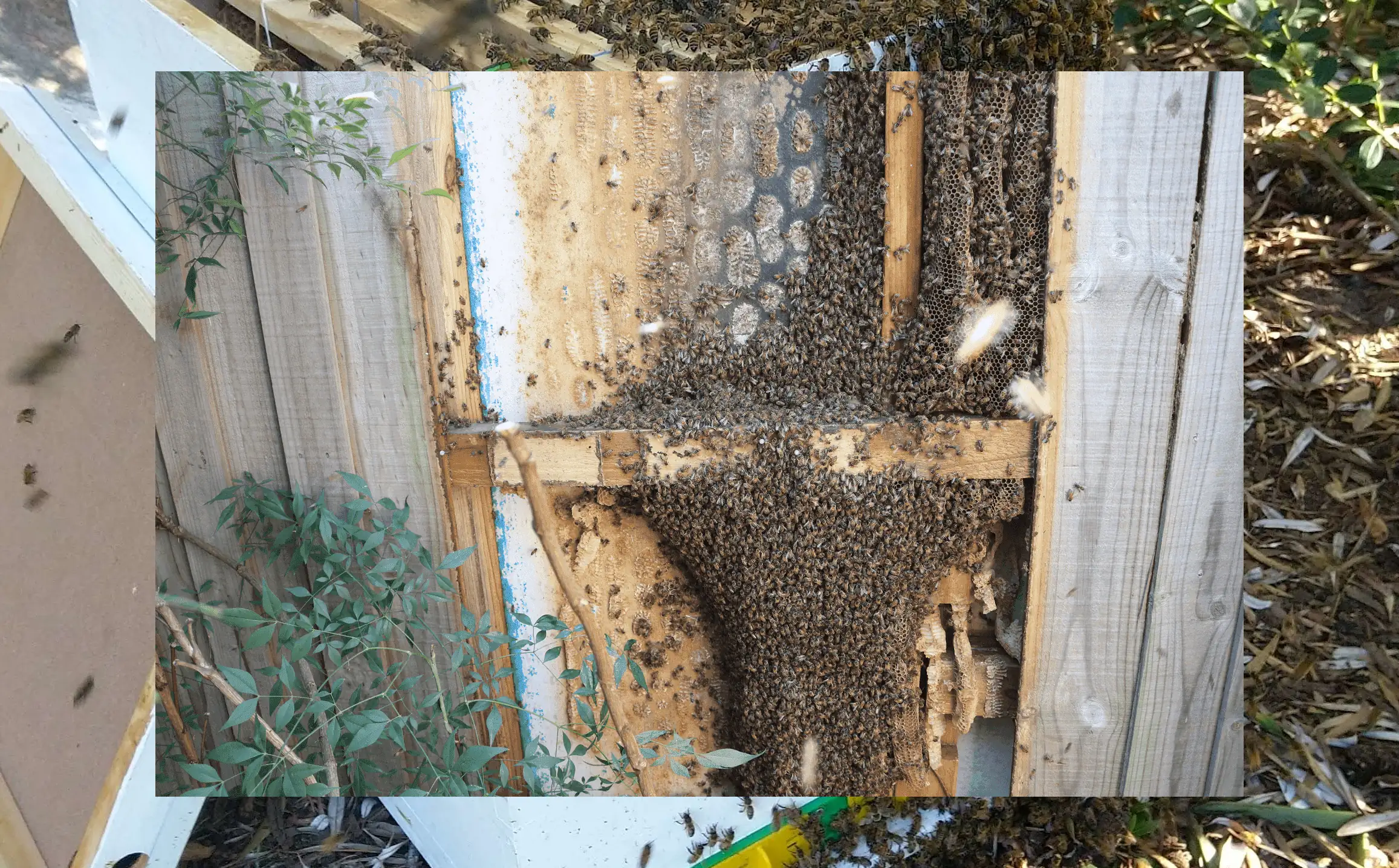
Local, practical help
Melbourne beekeepers, not a drop-shipper
We keep bees in Melbourne, supply local nucleus colonies and help new beekeepers get started. You can call us before you reserve, ask questions after you install, and get practical advice rather than a tracking number.
- Italian and Carniolan queen options
- Pickup in Melbourne or delivery across Melbourne and regional Victoria
- Installation advice and first-inspection guidance
- Local knowledge of Victorian conditions and varroa management
- Onsite beehive delivery, mentoring and inspection available
Recorded walk-through: A personalised HD video session can be added to the delivery visit. We film the transfer and first handling session so you have the practical detail to rewatch. See how the session works →
Choose with confidence
Italian or Carniolan queens — and what happens next
Looking for nucleus colonies in Melbourne? Both queen types can do well here. The better choice depends on your experience, the season and how you plan to manage the hive. We confirm what is available before you reserve.
Italian queens
Italian bees are usually light golden-brown, build up strongly in spring and are often chosen by new beekeepers for calm, workable colonies. They can be prolific, so keep an eye on space and stores during a strong flow.
Carniolan queens
Carniolan bees are darker and often build quickly when conditions improve. They are a popular choice in cooler districts and can work a strong nectar flow. Like any bee, temperament varies by colony and handling.
Not sure which is right for your site? Tell us your suburb, hive type and experience level when you call. We will recommend what suits the season rather than upsell the wrong colony.
Pricing, availability and delivery
Nucleus colonies are seasonal, and availability changes through spring and early summer. Prices vary with colony size, queen availability and delivery distance. We confirm the exact price, collection or delivery window and what is included before you commit. There is no online checkout and no deposit taken through this website.
- Ordering: call or send an enquiry with your suburb, hive type and preferred timing.
- Pickup: collect from Melbourne by arrangement; bring a suitable box or travel setup.
- Delivery: available across Melbourne and regional Victoria, with access and placement confirmed first.
- Handover: we check the colony with you, explain what is inside and answer first-week questions.
- Aftercare: installation advice and first-inspection guidance are included; onsite mentoring can be added.
Varroa and bee health
Varroa is now part of beekeeping in Victoria. Check your hives regularly, keep records and follow current state advice before moving bees or equipment. These independent references are a good starting point:
Google reviews
What Melbourne beekeepers say
Real reviews from customers who have bought nucleus colonies, moved hives or asked for practical help in Melbourne.
“I recently met Peter when one of my bee hives swarmed and ended up in my neighbour’s yard. He came and relocated the swarm, then went through my hives with me and gave me great advice. His passion for bees was contagious.”
“Peter was very easy to work with. He made the drive out to our rural property for a very reasonable price, was knowledgeable and calm when installing the bees, and everything went smoothly.”
“I am excited for our new colony. Peter was great to work with, delivery was seamless, and he gave some great advice.”
People also ask
Bee packages and nucleus colonies: common questions
Do you sell bee packages?
No. We supply nucleus colonies, not package bees. A nucleus colony is a complete mini-colony on eight Langstroth frames: organic wax foundation, drawn comb, brood, honey and pollen, worker bees and a young mated queen that is already laying.
What is included in a nucleus colony?
Each nucleus colony arrives in an 8-frame Langstroth box with a young mated queen, brood in all stages, worker bees, drawn comb, organic wax foundation, and stored honey and pollen. The colony is already integrated and functioning as a unit.
Why is a nucleus colony better than a package?
A package is loose bees plus a caged queen. The bees have no comb, no brood and no stored food, so they must draw foundation and accept the queen after installation. A nucleus colony already has all of those components working together, which gives a new beekeeper a much stronger and less disruptive start.
How much does a nucleus colony cost in Melbourne?
Pricing depends on the season, colony size and availability. Call 0430 370 440 for current pricing and to check what is available.
When are nucleus colonies available?
Spring and early summer are the usual times. Availability changes through the season, so call us and we will tell you what is realistic for your timing.
Do you deliver nucleus colonies?
We offer pickup in Melbourne and can discuss delivery across Melbourne and regional Victoria. We confirm the details before you reserve.
Do you help with installation?
Yes. We give practical installation advice and can talk you through preparing the hive, transferring the frames and the first inspection.
Can you transfer a nucleus colony into a Flow or Auto Hive?
Yes, when the brood box takes standard Langstroth frames. We transfer the eight frames in the same order and keep the brood nest together. Flow-style honey frames stay in the honey super; they are not brood frames. Check your model and box size before delivery.
Is the recorded video session included?
It is available as part of the delivery visit; ask when you book so we can plan the time. We record the transfer and first handling session, answer your questions and send a private link.
What about varroa and biosecurity?
Varroa is a serious issue for Victorian beekeepers. We inspect our colonies and can tell you about current health status and biosecurity practices. We do not claim that bees are varroa-free or disease-free; ask us about the current status before you reserve.
Happy with your bees? Leave a Google review.
Ready to start with a real colony?
Call Melbourne Beehives and we will tell you what is available, what is included and how pickup or delivery works.

Recommended supplier
Redpath’s Beekeeping Supplies
Need wax, honey or other beekeeping supplies? We recommend Redpath’s for wax foundation, frames, extractors, protective gear and hive hardware. Visit their online store to order.