
Bee hive with bees for sale
Bee hive with bees for sale means a complete established hive, a nucleus colony or a box of loose package bees. They are not the same purchase. This guide explains what should be included, what to check, and what Melbourne Beehives actually supplies.
Short answer: a genuine hive with bees should include a laying queen, brood in all stages, worker bees, drawn comb, stored food and a suitable hive box. Melbourne Beehives supplies 8-frame Langstroth nucleus colonies — a working colony on frames, not a complete hive with bees already installed. We also sell the 8-frame Langstroth hive box separately for $300; it comes with a vented bottom board with a tray and a robber/wasp guard, and the price may change. If you already have a Langstroth or Flow brood box, we can match the frames. If you need the box too, tell us before you pay.
Start here
Bee hive with bees for sale — what is actually included?
The phrase “beehive for sale with bees” gets used for three different products. The difference matters more than the purchase price, especially in the first month.
A complete established hive is a full colony already living in a hive box. It is the closest thing to buying a working beehive. It is heavier, usually more expensive, and less common than a nucleus colony. You are buying the box, frames and colony together.
A nucleus colony is a small working colony on frames: a young mated queen, brood, drawn comb, stores and workers. It is not a complete hive with bees already installed in a box. It is the standard way to start a new hive without buying someone else’s complete setup, and it is what Melbourne Beehives supplies.
Package bees are loose bees with a caged queen. There is no comb, no brood and no stored food. They are usually cheaper, but the colony has to build everything from scratch and accept the queen after installation. That is a harder start for a beginner.
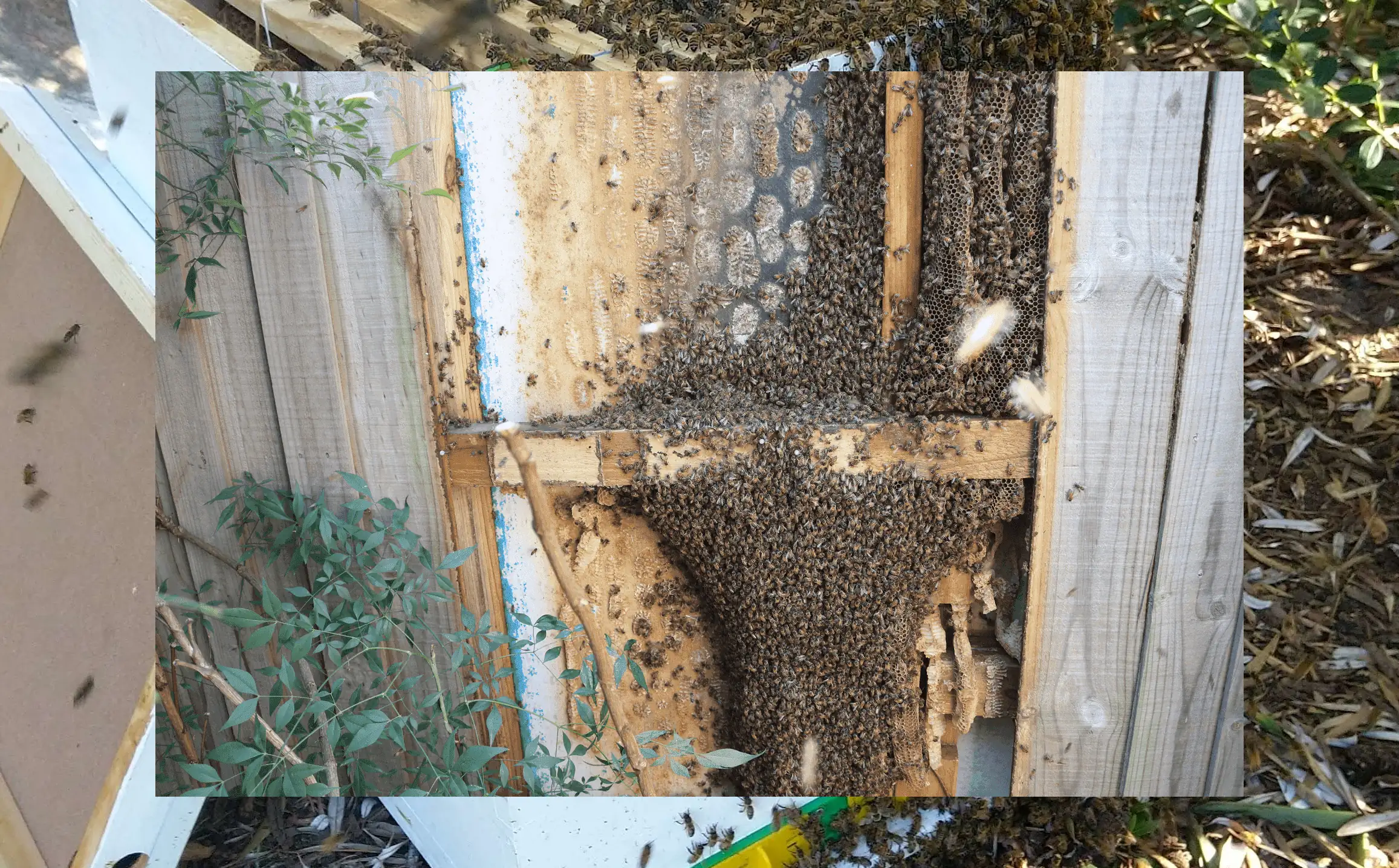
Compare
Hive vs nucleus vs package: which are you buying?
The right choice depends on whether you want a complete hive now, a strong start with frames, or the lowest upfront price.
| What you get | Complete hive | Nucleus colony | Package bees |
|---|---|---|---|
| Hive box included | Usually yes. | No — you supply the brood box. | No — you supply the hive. |
| Queen | A queen, often already laying. | A young mated queen, already laying. | A caged queen to introduce. |
| Brood | Yes, usually all stages. | Yes, usually eggs, larvae and capped brood. | No brood at installation. |
| Drawn comb | Yes. | Yes, on the frames supplied. | No — bees must draw foundation. |
| Stored food | Yes, but check condition. | Yes, on the frames supplied. | No — you must feed. |
| Best for | Buying a complete working setup. | Most new beekeepers; faster, lower-risk start. | Experienced beekeepers or a tight budget. |
| Main risk | Moving a heavy hive; unknown history. | Frame size and hive compatibility. | Queen acceptance, drawn comb and feeding. |
Our recommendation: for a first hive, a nucleus colony is usually the stronger start. You get a laying queen, brood and drawn comb immediately. A complete hive can work if you are taking over a known setup. A package is better left to someone who has installed one before.
What to check
What a hive with bees should include
Do not accept “the box has bees in it” as a complete description. Ask what is actually on the frames and who has inspected them.
A queen that is young, mated and laying
Ask whether the queen is mated, whether she has been seen laying, and whether she is marked. A queen that has not mated is not the same product as a laying queen. A young mated queen already laying is the standard for a nucleus colony.
Brood in all stages
Eggs, larvae and capped brood show a queen has been laying over time. A frame of adult bees with no brood is not proof of a healthy colony. Look for a compact brood pattern rather than scattered cells.
Drawn comb and stores
Drawn comb is the colony’s infrastructure. It holds brood, pollen and honey. A colony on bare foundation has much more work to do. Check that the frames have stores without being honey-bound.
Worker coverage
A colony needs enough workers to cover the brood, defend the entrance and build. A small cluster on a large frame is not the same as a strong nucleus colony. Ask how many frames the bees are covering.
A suitable hive box and frames
The box, roof, base, entrance reducer and frames are part of the setup. If the colony comes on 8-frame Langstroth frames, your brood box must take those frames. Flow Hive brood boxes can work when the frame size matches; confirm before you reserve.
Health and inspection records
Ask about Varroa monitoring, AFB history and recent inspections. No honest seller can promise “disease-free” forever. What matters is whether they monitor, record and disclose what they find.
Preparation
What you need before the bees arrive
A colony is the living part. The hive and gear are the part you control. Have these ready before pickup or delivery, not after.
- Hive box: an 8-frame or 10-frame Langstroth brood box that matches the frames you are buying.
- Frames and foundation: enough for the colony plus spare frames for inspections.
- Roof, base and entrance reducer: weather protection and a smaller entrance for a new colony.
- Hive stand: keep the box off the ground, level and ventilated.
- Feeder: a clean feeder for sugar syrup if the colony needs it.
- Beekeeping suit and gloves: do not plan to “just use a jacket” for your first inspection.
- Smoker and fuel: a cool smoke keeps the inspection calm.
- Hive tool: for separating boxes and frames.
- Water source: a shallow, bee-safe water source nearby.
- Registration: register the apiary before the bees arrive if you are in Victoria.
If you are buying a complete hive, confirm whether the box, frames, roof, base and feeder are included. “Hive with bees” sometimes means only the colony and brood frames, with no outer box.
Timing
When to buy a hive with bees in Melbourne
Spring and early summer are the usual buying window. The colony has time to draw comb, raise brood and build stores before the cooler months. Late autumn and winter sales are harder to establish, especially for a first hive.
Melbourne conditions swing: a warm early spring can be followed by cold, wet weeks. A new colony needs a reliable nectar and pollen source, not just a sunny day. Check what is flowering in your area and whether the colony has enough stores to bridge a dearth.
Summer heat matters too. A small colony in a full sun position can struggle. Plan shade and ventilation before the first hot spell. If you are buying in late summer, ask how the colony is managing Varroa and whether it has enough time to build before winter.

Rules
Legal and biosecurity rules in Victoria
Beekeeping is regulated. Before you buy a hive with bees, make sure the apiary can be registered and the hive meets Victorian requirements.
Registration
In Victoria, anyone who keeps one or more hives must register the apiary with Agriculture Victoria. Registration is renewed every two years. Keep the registration details up to date if you move the hive.
Removable frames
Hives must have individually removable frames so they can be inspected. A fixed comb or a box that cannot be opened for inspection is not a compliant hive.
Branding and traceability
Beekeepers must brand hives as required and keep records that allow the hive to be traced. Ask the seller for the hive history and any registration details that transfer with the colony.
Disease notification
AFB, Varroa and other notifiable pests must be reported. If you suspect Varroa, record a Varroa inspection event in BeeMAX and call the Emergency Plant Pest Hotline on 1800 084 881.
Varroa monitoring
Monitor each apiary at least four times a year, and about every four weeks where Varroa is endemic. Use an approved monitoring method, record the result, and treat only according to APVMA permits and label directions.
Local rules
Check your local council rules on hive numbers, setbacks and water. A hive that is legal on one block may not be allowed on another. Ask before you buy, not after the bees arrive.
Current Agriculture Victoria guidance is the source to check before you buy or treat. Rules and Varroa advice can change.
Handover
Delivery, pickup and installation
Moving a colony is not like moving a box of furniture. Bees need to stay cool, ventilated and secure. Plan the move before the day.
Pickup
Pickup is available in Melbourne by arrangement. Bring a vehicle with enough space, secure the frames so they cannot shift, and keep the colony out of direct sun. Do not put a closed box in a hot car and leave it there.
Delivery
Delivery across Melbourne and regional Victoria can be discussed before you reserve. We confirm the address, access and timing first. Delivery is not a guarantee that the colony will establish; the site and the first inspection still matter.
Installation
A nucleus colony is installed by transferring the frames into your brood box in the same order. Keep the frames upright, replace the lid, and reduce the entrance. Do not shake the bees out like a package.
First check
Check after a few days that the queen is laying and the colony is calm. Avoid opening the hive repeatedly in the first week. Feed if the colony has little stored food and the weather is not producing nectar.
If you have never installed a colony, ask for a quick walk-through before you take it home. A five-minute explanation prevents a lot of avoidable damage.
Avoid mistakes
Red flags when buying a hive with bees
- “Disease-free” without evidence. No seller can guarantee a living colony will never get disease. Ask about monitoring and records instead.
- No brood, only adult bees. A box of workers with no brood and no queen is not an established colony.
- No inspection allowed. If you cannot see the frames, you cannot verify the queen, brood, stores or health.
- Queen not laying. A mated queen that is not laying may be failing, injured or recently introduced. Ask when she was last seen laying.
- Frame size mismatch. A bargain colony that does not fit your hive is not a bargain.
- Pressure to pay today. Good sellers can answer basic questions about age, queen, brood, Varroa and hive history.
- No registration or biosecurity awareness. A seller who dismisses Victoria’s registration and Varroa rules is a risk to you and nearby beekeepers.
Buying help
Bee hive with bees for sale — questions to ask
Can I buy a beehive with bees already in it?
Yes, but “hive with bees” can mean a complete established hive, a nucleus colony on frames, or a package of loose bees. Ask exactly what is included: box, frames, queen, brood, stores and drawn comb. Melbourne Beehives supplies 8-frame nucleus colonies and 8-frame Langstroth hive boxes separately.
Is a hive with bees better than a nucleus colony?
A complete hive can be right if you want a working setup and are prepared to move a heavy box. A nucleus colony is usually the better first purchase because it is lighter, easier to install and already has a laying queen, brood and drawn comb.
Do I need to buy the hive box as well?
With a nucleus colony, yes — unless you already have a compatible brood box. We sell an 8-frame Langstroth hive box for $300; it includes a vented bottom board with a tray and a robber/wasp guard. Frames, lid and stand may be extra, and the price may change. Confirm what is included before you pay.
How much does a hive with bees cost in Australia?
It depends on the size of the colony, the queen, the hive hardware and delivery. A complete established hive is usually more expensive than a nucleus colony, and package bees are usually cheaper again. Call for current Melbourne availability and pricing rather than relying on an old online figure.
How many frames should a hive with bees have?
A nucleus colony is commonly supplied on five or eight frames. Melbourne Beehives supplies 8-frame Langstroth nucleus colonies. A complete hive normally has a full brood box. Ask how many frames the bees are actually covering, not just how many frames are in the box.
Can I move a hive with bees to a new location?
Yes, but it needs planning. Secure the frames, keep the colony ventilated and out of direct sun, and follow the rules for moving hives. Long-distance moves and moving during hot weather need extra care. Ask for advice before the day.
Do I need to register a hive in Victoria?
Yes. Anyone keeping one or more hives in Victoria must register the apiary with Agriculture Victoria and renew every two years. The hive must have individually removable frames. Check the current Agriculture Victoria requirements before you buy.
What should I check before buying a hive with bees?
Check the queen, brood in all stages, drawn comb, stored food, worker coverage, frame size and disease history. Ask about Varroa monitoring and AFB. Inspect the frames if possible and avoid any seller who will not show them.
Can I put a hive with bees in a Flow Hive?
A nucleus colony can be installed in a Flow Hive brood box when the frame sizes match and the box is set up correctly. The Flow super is for honey storage, not for starting the colony. Confirm the brood-box setup before you reserve.
Do you deliver hives with bees in Melbourne?
Pickup is available in Melbourne, and delivery across Melbourne and regional Victoria can be discussed before you reserve. We confirm the address, access and timing first. Delivery does not replace the need for a suitable site and a first inspection.
Want a real colony, not a box of loose bees?
Tell us your suburb, hive type and timing. We will confirm whether an 8-frame nucleus colony fits your setup and what you need before it arrives.